Headless Development Custom Framework Frontend Development
Headless Development Custom Framework Frontend Development
Not every project fits the same mould. We build headless frontends on the framework that genuinely fits your use case — Astro, SvelteKit, Remix, or Next.js — engineered for performance, maintainability, and your team’s workflow.
What This Service Covers Framework-first headless development for teams with specific requirements
We don’t default to one stack for every project. We evaluate your content model, traffic patterns, interactivity requirements, and team skills — then recommend and build on the framework that delivers the best result. Every frontend is decoupled, type-safe, and built to last.
Astro — Maximum Performance for Content Sites
Astro ships zero JavaScript by default. For content-heavy sites — blogs, documentation, marketing pages, news portals — this means near-perfect Lighthouse scores without any configuration. We use Astro’s island architecture to hydrate only the components that genuinely need interactivity, keeping the rest as pure static HTML.
Combined with your existing CMS, Astro gives you a blazing-fast frontend with full editorial flexibility. It’s our go-to recommendation for sites where content volume is high and client-side logic is minimal.
SvelteKit — Lean Bundle, Rich Interactivity
SvelteKit produces exceptionally small JavaScript bundles and an elegant developer experience. For projects that need rich interactivity without the React overhead, SvelteKit often delivers a better INP score and a noticeably snappier interface.
We build full SvelteKit applications with SSR, SSG, and edge rendering — connected to WordPress or any headless CMS via REST or GraphQL.
Remix — Data-First, Full-Stack React
Remix is ideal for applications with complex data dependencies, form-heavy workflows, and progressive enhancement requirements. We use Remix for portals, dashboards, and tools that need server rendering on every request while retaining the React component model.
Nested routes, co-located data loaders, and strong error boundaries make it a serious option where a standard static site setup would struggle.
Next.js — The Full-Featured Standard
Next.js remains our most common choice for headless WordPress projects. The App Router, React Server Components, ISR, and broad ecosystem make it the most robust option for teams that want flexibility without sacrificing maturity.
We build with Server Components by default and use Client Components only where browser-side interactivity is necessary, keeping bundles lean and pages fast.
Framework Migration & Modernisation
Already on an older frontend stack? We handle framework-to-framework migrations — from Gatsby to Astro, CRA to Next.js, or legacy SSR setups to modern app architectures. We preserve URL structures, SEO metadata, and launch continuity while modernising the codebase.
The result is a frontend that feels current, faster to work in, and much easier to maintain.
Framework Strategy Choosing the right stack is part of the service
We don’t sell a framework before we understand the problem. Some projects need maximum static performance. Others need authenticated dashboards, personalised content, or rich product interactions. The right stack depends on rendering strategy, data flows, and your team’s long-term maintenance needs.
We map those requirements early, document the rationale, and choose the framework that gives you the best balance of performance, flexibility, and developer efficiency.

Frameworks & Tooling Technologies we use for custom headless frontends.


Other headless development services
Custom frameworks are one part of a broader headless delivery stack.
WordPress to Headless
Migrate your existing WordPress site to a decoupled architecture while preserving editorial workflows and SEO continuity.
Headless eCommerce
Custom storefronts connected to WooCommerce, Shopify, or custom commerce APIs — built for speed and conversion.
CMS Integrations
Connect your headless frontend to WordPress, Contentful, Sanity, Storyblok, or any API-first CMS.
Progressive Web Apps
Turn your headless frontend into an installable PWA with offline support, push notifications, and app-like performance.
Talk to Us
Need help deciding on the right architecture? We’ll scope the project with you and recommend a framework that genuinely fits.
About Our Approach
We design and build modern web platforms with a strong focus on performance, maintainability, and editorial usability.
What the right framework unlocks
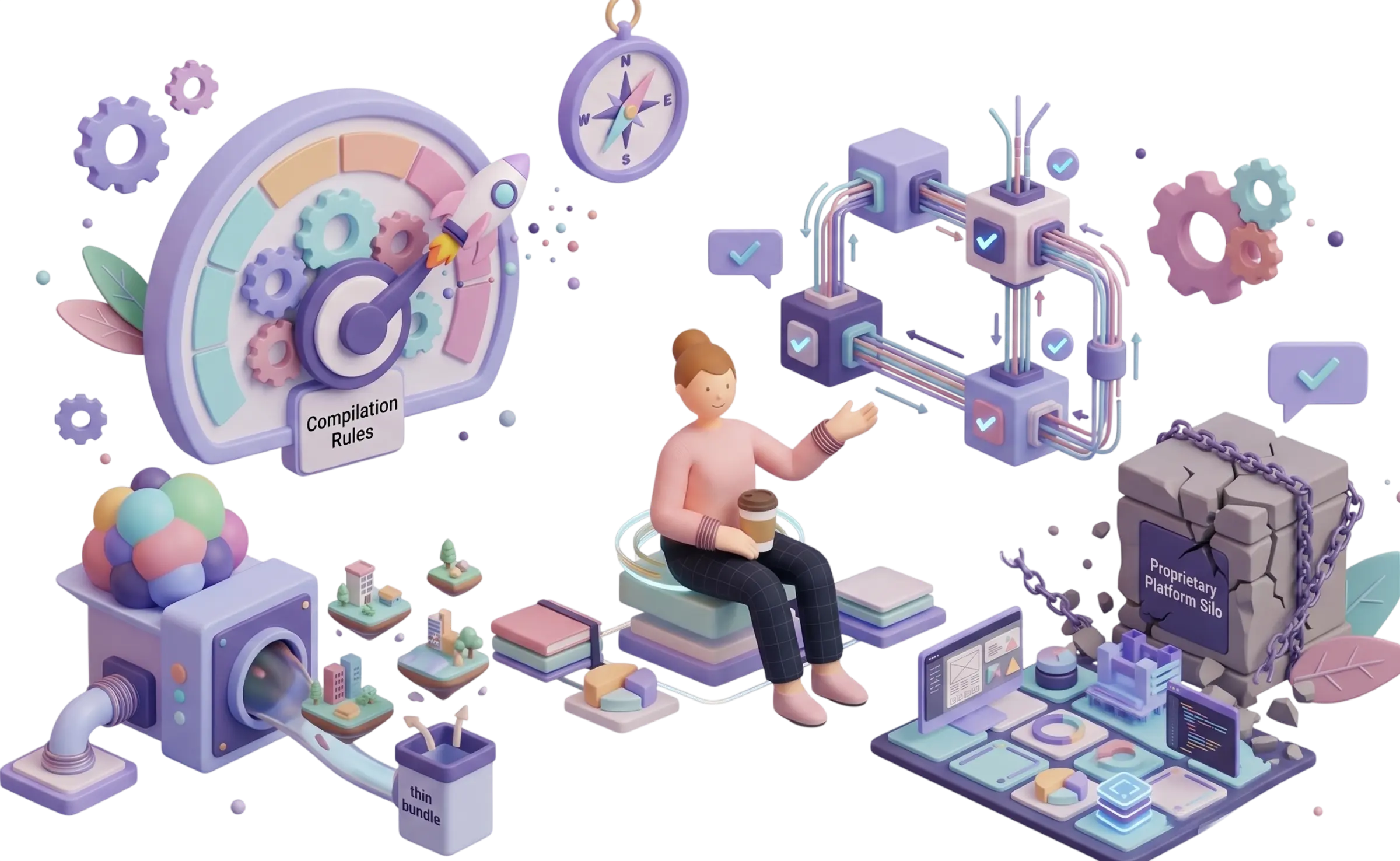
- Performance Optimization — Tailoring compilation rules directly to your core presentation goals
- Hydration Control — Eliminating bundle bloat dynamically with island rendering parameters
- Type Stability — Implementing end-to-end type safety interfaces across upstream data providers
- Architectural Freedom — Ensuring long-term technical decoupling away from proprietary platform silos

Frequently asked questions
Answers to common questions about custom framework selection and headless frontend development.
We evaluate your content volume, interactivity needs, expected traffic patterns, API surface, and team familiarity. Astro is excellent for content-heavy sites, SvelteKit for lean interactive apps, Remix for data-heavy tools, and Next.js for broad ecosystem support and WordPress-connected projects.
Yes. If your team has already committed to a stack, we can build within it or audit the decision before development begins. We’re happy to either validate the choice or suggest an alternative if the project requirements point elsewhere.
Yes. We handle migrations from Gatsby, CRA, older Next.js setups, legacy SSR applications, and other ageing stacks. We preserve SEO, improve maintainability, and modernise the architecture without disrupting the live site.
No. The framework choice is independent of the CMS. Your frontend can be rebuilt in Astro, SvelteKit, Remix, or Next.js while keeping WordPress, Contentful, Sanity, or another headless CMS exactly where it is.
Most projects take 4–10 weeks depending on scope, complexity, and integrations. A content-focused Astro build will usually move faster than a Remix-based application with forms, authentication, and personalised data.
Related articles & resources
 Headless Architecture
Rebuilding Restrictive Webflow and Shopify Sites into Managed CMS Masterpiecese
The Proprietary Trap: When SaaS Builders Become Profit Cages It usually begins as an efficient shortcut. When launching a new digital store or enterprise web presence, all-in-one SaaS platform builders like Shopify or visual design spaces like Webflow seem like the perfect answer. They promise zero-code environments, quick template setups, and managed hosting options that ...
 Mobile App Dev
Bridging the Web App Gap: Converting Your Website into Native iOS and Android Apps
The Mobile Dilemma: Responsive Web vs. True Native Performance Almost every business recognizes that mobile devices drive the vast majority of their digital traffic. For years, the standard remedy was simple: make your website responsive. Ensure that grid layouts stack vertically, navigation links scale down for touch controls, and images shrink appropriately for smaller screens. ...
 Headless Architecture
Beyond the Monolith: Why It’s Time to Take Your WordPress Headless
The Architecture Bottleneck: Why Traditional WordPress Is Stalling Your Growth Every scaling digital business eventually hits the WordPress wall. It starts innocently: you build a custom site, install a few plugins for SEO, a couple more for marketing automation, and an optimization layer to help manage caching. But over time, the monolithic architecture of traditional ...